
Frequently Asked Questions
This document is provided for free, but wouldn’t be possible without the help of many volunteers and contributing members of IPA. If you find the material helpful, please consider making a donation to IPA so we can further our efforts in helping those with paruresis.
The information given in this document is not intended as a substitute for therapy or medical advice from a professional. IPA recommends that anyone seeking help for paruresis obtain professional advice before and during a treatment program.
Click on one of the following questions to jump to the answer. The questions are organized so that one or two are covered on a page, making printing easier if you only need a portion of the FAQ.
Q: How do you pronounce “paruresis?”
A: It’s pronounced: “par-YOU-ree-sis.” The origin of the word is from the Latin language, and means abnormal urination. It is the technical medical term for the condition.
Q: Is this condition mental, physical, or something else?
A: For diagnostic purposes, paruresis is classified as a social phobia in the Diagnostic and Statistical Manual of Mental Disorders (DSM-IV 300.23). However, this classification does not mean the cause of paruresis is purely mental, or that a person with paruresis is “mentally ill.” We don’t understand enough about paruresis at this point to state that it only has one origin. The description given in the DSM currently classifies it as a Social Anxiety Disorder with contributing genetic, physiological, and environmental factors. Indeed, there is growing evidence that anxiety has a genetic and physiological origin, not a mental one.[i]
Until we know more, it can be helpful to think about paruresis as a disease that can be treated with a variety of approaches, including psychotherapy, medication, and support group work. Having paruresis does not mean you are crazy, suffer serious psychological problems, or that you might end up in a mental hospital. It simply means you experience anxiety that affects your ability to urinate. When a person learns proven techniques to manage the anxiety, recovery becomes possible. Many people are recovering successfully from this disease. You might also wish to think of paruresis in terms of having a skill (peeing in public) that needs some improvement work in order to live the life you want. Thinking you are inferior or blaming yourself has been shown to make recovery more difficult, so start off on the right foot by realizing you are not responsible for your paruresis (just like you aren’t responsible for getting a cold.) What you are responsible for is your recovery.
Anxiety is a very powerful feeling. When a person experiences anxiety, their mind will try to figure out a solution to reduce it. Often, people adopt a strategy of avoiding the situation where they felt the anxiety. Unfortunately, avoiding the situation has a strange effect, and the anxiety can increase in intensity after a period of staying away from the fear-inducing situation.
Confronting the anxiety can also be dangerous, as a person can develop a panic response to the situation. Once a panic response develops, even the thought of visiting a restroom can trigger intense anxiety and desire to avoid. These are logical consequences to the brain’s instinctive reaction to reduce unpleasant feelings. They don’t mean a person is necessarily mentally ill. What they do mean is that a person needs to learn other ways to manage the anxiety that don’t have these unhealthy consequences. Learning these techniques is part of the treatment and recovery process.
Defeating avoidance is in many ways a form of jujitsu. It is using a weak position to defeat a stronger enemy through learning the vulnerabilities of the enemy and using gentle, carefully applied force in the right places and at the right times.
Q: What kinds of treatment are available?
A: The following treatment methods have all been shown to have some effectiveness in treating avoidant paruresis (AP). We define “shown” as meaning that people with paruresis who have tried these techniques have reported benefit. The current state of research does not yet include a true double-blind clinical trial for any method below. The chances of success for any method will depend on a number of factors, both known and unknown, and there may be risks associated with each approach.
- Cognitive-Behavioral Therapy (CBT)
Method: A process of work with a psychotherapist that includes graduated-exposure therapy, where a person is gradually introduced to the feared situation and over time becomes more comfortable (“desensitized”) to the fear. Work also involves examining the person’s thought processes and learning to counter irrational thinking with more healthy patterns of thought.
Benefits: The process can be short-term, usually six to ten office visits followed by a period of independent work and one or two follow-up visits. This method can produce permanent changes in behavior that do not require long-term use of medication for many individuals. With a competent therapist and a dedicated patient it can be very successful.
Risks/Shortcomings: Cost of treatment, approximately $125 per session. The relationship between patient and doctor is crucial to success, so a person may need to switch therapists if the method is not working out. Mental health therapy can have an impact on a person’s insurability, so a person needs to look at the risks in their particular situation. Paying cash for treatment is one way to prevent an impact on one’s medical record from undergoing psychotherapy. CBT may not provide complete relief from symptoms; some patients may need additional sessions or other kinds of treatment to achieve the level of anxiety reduction required for long-term recovery.
- Support Groups
Method: Regular participation in a group of people with paruresis to practice graduated exposure exercises, provide support and encouragement, and discuss the person’s experiences and thoughts
during the recovery process.Benefits: Support groups are usually free. The process can produce permanent changes in behavior that do not require long-term use of medication. It is a valuable adjunct to people undergoing medication and/or CBT because group participation happens outside a doctor’s office in a real-life setting, and serves as a way of increasing the frequency and intensity of work on graduated exposure practice. Supportive partnerships develop in a well-run group that can aid in addressing setbacks and other problems that may crop up in the recovery process. Groups also provide the benefit of working with people who have personal experience in recovering.
Risks/Shortcomings: There are differences in support groups, so the quality and atmosphere is not guaranteed or controlled. The size of the group, frequency of meetings, and relationships between participants will vary from group to group. Because of these risks, using a support group as the only method of working on recovery may not work out unless it happens to be an excellent group. Because there is no professional assistance, a support group is unlikely to address other psychological issues that may accompany paruresis.
- Medication
Method: Use of prescription drugs under a doctor’s supervision that reduce anxiety and depression allowing a person to develop more healthy thinking patterns over time. Medication is usually combined with a program of CBT and/or support group work. The preferred class of drugs prescribed for social anxiety is the Selective Serotonin Reuptake Inhibitor, or SSRI, because it provides benefits with the fewest risks. Other drugs that have been proven clinically effective to reduce social anxiety may be effective for paruresis treatment depending on your particular situation. Monoamine Oxidase (MAO) inhibitors are a class of drugs that has high effectiveness for social anxiety, but carries greater risks and strict dietary restrictions. There are several other classes of antidepressants that are sometimes used to treat anxiety and social phobia. It is best to seek assistance from a psychiatrist (M.D. or D. O. degree with appropriate advanced training and board certification). Note, a psychologist (typically someone with a Ph.D. or Psy. D. degree) cannot prescribe medicine.
There are also large number of medicines known as minor tranquilizers that may be used to treat anxiety and social phobia. Some, but not all, are controlled substances because they may over time cause a physical dependence on the medicine. Usually, though, it is fairly easy to gradually reduce the dose if your doctor agrees that you should no longer take the medicine.
Other drugs, notably D-cycloserine and gabapentin, are being investigated for possible treatment but are prescribed “off-label.” A licensed physician may prescribe medicines to treat a condition as s/he thinks appropriate. Many if not most medicines are routinely prescribed for “off-label” treatment.
Benefits: These medications can make the difference between success and failure in recovery for some people. Medication can improve the ability of a person to make lasting changes in personality that reduce or eliminate the need for medication after a period of about a year. General reductions in anxiety with medication use may transfer to other situations and improve a person’s overall functioning and well being.
Risks/Shortcomings: Cost may be substantial since medications are a long-term prospect. There may be dependency issues to work out when stopping the medication or changing to a different one. Insurance is often used to reduce cost, but a history of psychiatric care might result in stigmatization in employment or insurability. We urge young people to get the treatment they need, but to be especially aware of these potential difficulties. Those in stable careers and older individuals don’t usually need to be too concerned about stigmatization. If your medical history includes a use of anxiety medications you run the risk of being uninsurable if you apply in the future for individual coverage instead of a group coverage policy from an employer. Paying cash for medical care and medications is a way to reduce this risk if a person can afford it. IPA believes that medication alone is not an effective treatment for paruresis, it must be combined with CBT and/or support group work.
Many medications have side effects that a person will need to deal with. Several classes of antidepressant medications tend to have sexual side effects, weight gain, dry mouth, and effects on digestion. Recent research is revealing that genetic differences can reduce or eliminate the effectiveness of SSRIs in some people.[ii] So if a medication or class of medications isn’t working, changing to a different one may be needed.
There is now a required FDA warning for many SSRIs regarding increased suicide risk for young people. Adults may have some suicide risk, but it appears to be greatly reduced and possibly nonexistent. Any thoughts of suicide, especially if they are coupled with some intent to actually do it, are a medical crisis. Go to an emergency room or to your personal physician immediately. Anyone on a medication program needs to be monitored for changes in personality that could be dangerous, but such changes are rare and unlikely for most people.
While many report they can reduce or eliminate the medication after a period of time, some patients have entered a cycle of increased dosages, multiple medications, and/or changes in medications that has decreased their quality of life. Each person needs to be aware of these risks and work closely with a trusted doctor to manage them properly and prevent problems.
The three main approaches outlined above can be combined together to increase a person’s chance of success. The decision to do this will depend on a person’s situation, and it is best to consult a treatment professional on which options to combine. At different stages in treatment, different options may be appropriate. For instance, at the early stages when anxiety levels can be quite high and difficult to control medication may be appropriate, but as a person makes progress, support group participation may be a better option because it reduces reliance on a drug and increases emphasis on changing one’s thinking through the process of helping others and accepting others’ help.
IPA workshops are a short-term form of treatment that address cognitive-behavioral approaches of graduated exposure therapy, and introduce a person to an environment they will experience in a support group. A workshop is a good place to begin a treatment program, but one or more of the three approaches above are critical to adopt on a long-term basis for a person with paruresis to make a full recovery.
A very few people have reported benefits from “alternative” forms of treatment such as hypnosis, meditation, herbal remedies such as Kava or St. John’s Wort, etc. IPA does not endorse these methods as being effective for most people. If a person wants to experiment with alternative forms of treatment, we recommend that the exploration be conducted under the guidance of a treatment professional.
Generally, alternative forms of treatment may have a greater benefit when pursued in combination with the more traditional approaches above. We are not aware of cases where they alone produced a complete recovery.
Some people have learned to practice Clean Intermittent Self-Catheterization (CIC) as a means of coping with paruresis in difficult situations. While using a catheter is not a method of treating paruresis, it does provide a measure of security, help the person lead a more normal life, and be able to give a urine sample for mandatory drug testing if there is no alternative test available. A sympathetic urologist can instruct you on how to do this procedure. More information can be found at IPA’s Catheters page. Catheter use is a survival technique, not a recovery technique.
Everyone recovering from AP needs to know when to practice survival and when to be working on recovery. Both are valuable skills, but the latter is the only way to reduce the need for practicing survival.
Q: I’m facing a urine drug test for employment, what can I do?
A: It depends on how much time you have. Because a recovery program can take several weeks or months to produce significant progress, your options are more limited if the test is in a few days. If you know the test isn’t likely for quite a while, get into a recovery program immediately. You may be able to provide a sample without any additional measures.
Every person with paruresis needs to document their condition with a doctor before taking a drug test. This step helps establish that you have a medical condition that makes providing urine difficult. Unfortunately, regulations for drug testing currently in force (which IPA is working to change) state that inability to provide a urine sample is the same as refusal to provide one. Essentially, a person with paruresis is assumed guilty of drug use without any evidence of drug use. If your drug test is in a few days, get to your doctor immediately. Have the doctor write a letter that documents your paruresis and provide that letter to the drug-testing monitor when the test is done. If possible, also have your doctor perform a blood, saliva, or hair test as close as possible to the date of your urine test so there is an independent verification of your drug-free status. While this will cost you some money, it may protect you from loss of your job, or help you in getting one if you are unemployed. A hair test is considered to be the best one for establishing drug-free status, as it can detect use for up to three months prior to the date of the test. Blood tests are more expensive and considered less useful because most chemical traces of drug use are cleared quickly from the bloodstream.
The way urine-based drug testing programs work, having an alternative test before the urine test is not considered hard evidence of a person being “clean.” The purpose of taking this test is to help protect you legally if you decide to take court action against the *employer, or file a complaint with your state’s employment rights protection board.
Anyone who is asked to take a drug test should probably take his or her own test immediately afterward. This protects you from false allegations resulting from errors or inaccuracies; they do happen.
The most certain way of being able to provide a urine sample is to learn to use a urinary catheter. A urologist can teach you how to use one in advance of the test. It will likely take at least a week to schedule an appointment, learn to use a catheter, and practice with it in advance of the drug test. When scheduling the appointment, get an assurance from the urologist or nurse that you will be instructed in the use of the catheter. Explain the reason you are seeking help is to pass a drug test. Do not allow a urologist to delay, ask for more tests, or prescribe drugs as a solution. Your job is on the line. Under no circumstances should you try to use a catheter without instruction, as there are risks associated with improper use, and you may have a physical problem that can only be discovered through a doctor’s examination. See IPA’s Catheters page for more details.
If you are seeking Federal employment, an important regulation to be aware of is that SAMHSA regulations apply to you. Under these regulations, ONLY a Medical Review Officer (MRO) can make the determination that a failure to provide a sample is a refusal to test. The MRO is a person who reviews drug test results, and usually is not present at the time of the test. If you bring documentation of your paruresis with you to the test site and can’t provide a sample, the MRO could be your best friend. Make sure that person gets your documentation.
If the drug test is several weeks away, you have time to desensitize to the drug test situation by working on some simulated drug testing with a pee buddy acting as the drug-test monitor. Try to arrange most of the day to spend with the person, drink a fair amount of water throughout the day, and ask the person to choose random times (unknown to you) to whip out a cup and say “time for a sample.”
If possible, use a restroom that closely simulates the one you’d find at the lab. Have your buddy simulate as closely as possible what the monitor would do, stand the same distance away, give you a time limit, etc. If you do this exercise several times a week for a few weeks, giving a sample will get a lot easier. It’s important to remember that your rate of progress may differ, so do not depend on this practice to get you through the test. Do all the other things listed in the summary below to increase your chances of having a good experience at the test.
In summary:
If you have a few days before the test, do the following:
- Document your condition with a doctor (see sample letter below)
- Familiarize yourself with the DOT (Department of Transportation) or SAMHSA (Substance Abuse and Mental Health Services Administration) regulations so you can demand your rights if necessary.
- Be aware that the DOT and SAMHSA rules do not apply in most testing situations, particularly in the private sector. Private employers have a great deal of freedom to do as they wish consistent with the laws of their own state.
- Ask your doctor for instruction on how to use a catheter
- Get an independent test of hair, oral fluid, or blood to establish you are not a drug user.
If you have a few weeks or months, do this:
- Document your condition with a doctor (see sample letter below)
- Get into a recovery program immediately
- Stay absolutely clean as far as drug use so that you can pass a hair test if needed
- Begin practicing simulated drug tests with a trusted person so you can reduce anxiety in the test situation.
- As the time for the test approaches, you will know from your rate of progress if you’ll need to learn to use a catheter in order to be sure you can provide a sample.
Once your doctor establishes a diagnosis of paruresis, here is a sample letter the doctor can provide that may help in persuading drug test labs to provide reasonable accommodation for you: “Re: Drug Testing (via urinalysis)
This is to document the fact that NAME has been a patient of mine since YEAR, and from the time of his first office visit, was unable to produce urine samples on demand, necessitating the need for him to bring urine samples from home. The inability to urinate on demand or under time pressure (and also frequently in the presence of others in a public setting) is called paruresis (more commonly known as “shy bladder”) and is a bona fide social anxiety disorder listed in the Diagnostic Statistical Manual of Mental Disorders IV with Code 300.23.
NAME has shared with me that he is quite willing to be drug-tested at work, as frequently as he is selected to do so, but given his paruresis condition which in the past he has attempted to over-come by drinking un-healthy and potentially-dangerous amounts of water, I suggest an alternate form of testing (such as saliva, sweat, hair or blood analysis) be employed.”
Q: I’m facing a urine drug test in prison, for probation, or related to a criminal/civil judgment. What can I do?
A: You should provide your attorney with a heads-up on this situation so there is someone who can defend you at the probation hearing, and further advise you about legal issues and your rights after conviction.
You need three things to make your case: (1) Medical documentation of your condition, (2) a lawyer willing to work hard for you, and (3) the information and assistance that we can provide—which could include expert testimony about paruresis in general and arguments to help establish your rights to alternative testing to prove your drug-free status.
Show your lawyer this document. If your lawyer has any questions, please contact IPA at our 800 number for further clarification. IPA can help you get in touch with a lawyer with a history of successful legal challenges so yours can establish precedent in court. The key vulnerability in current drug testing policy where your lawyer can make a persuasive argument is that a policy of calling an inability to provide a sample “a refusal to test” and presuming drug use based on the inability to provide a sample is a discriminatory practice, especially for a person with paruresis. A person with shy bladder or paruresis wants to give a sample, but is unable to do it.
The United States justice system is based on the fundamental concept of “innocent until proven guilty,” but drug-testing policy turns this concept on its head. The person who is unable to produce a urine sample is presumed guilty in the absence of any evidence. Drug use must be established by testing, and without a test or a witness testifying you were under the influence of drugs at the time of the test there is no evidence of drug use, nor is there reasonable suspicion of it. You can offer to provide the evidence by any other means that’s convenient for you, such as a hair test, using a catheter to obtain the urine sample, a saliva test, or a sweat patch. You or your lawyer will need to prevail upon the judge to use common sense in your case, not a policy based on invalid assumptions that people can urinate in front of someone watching them.
Equating a refusal to test with guilt is erroneously based on laws for driving under the influence of alcohol, where a person’s refusal to submit to a breathalyzer test given at the police station is legal evidence of guilt in most states. However, there are key differences. In the case of drunk driving, there is an arresting officer who gives a field sobriety test to the driver and observes through the driver’s behavior suspicion of intoxication. There is also an “implied consent law” where a licensed driver agrees to submit to testing for intoxication in order to be granted the privilege to drive. There is no such implied consent governing you in this situation. Staying off of drugs may be a condition of probation or a requirement if you are serving a jail sentence, but proving you are drug free can be accomplished through a variety of means other than urine testing.
From a medical point of view, the alcohol breath test is quite different from a urine test. We all must breathe; there is no such thing as an inability to breathe for a living person. Urination, however, is quite different. A person with paruresis won’t be able to urinate with others present. Contrary to widespread public belief, the muscles that control urination are not under the person’s voluntary control.[iii] Someone with paruresis won’t be able to urinate until their anxiety disappears, which will not happen in a drug testing facility. The person may experience bodily harm in terms of bladder or kidney damage before being able to urinate. A doctor serving as an expert witness can explain to the court that once a person’s bladder fills beyond a certain point, it may be impossible to drain it without medical intervention. There will be horrific pain, and only insertion of a catheter will empty the urine from the person’s bladder. This amounts to cruel and unusual punishment without any evidence of guilt. It’s the legal equivalent of torture.
If these arguments are made successfully, your lawyer should be able to prove that there is no solid legal basis for presuming drug use if a person with paruresis is unable to provide a urine sample. If you have an alternative test showing you are drug free, the court should find in your favor. IPA wants to hear from anyone with either a positive or negative court decision regarding drug testing so we can continue to strengthen our arguments.
We suggest to your PO or correctional health administrator that they use a hair test, sweat patch, or oral fluid test on you. These are inexpensive, and the hair test is especially good for detecting use of drugs during the past 90 days. In other words, if you have been staying off the stuff for 3 months, the hair test will prove it. Another option is to see a doctor or urologist and learn to use a catheter to provide the urine sample. See IPA’s Catheters page for more details. Tell your probation officer or other authority involved in the drug testing program about these options and try to work with them to find one that is acceptable to both of you and involves the minimum cost.
Alternative tests are less expensive for the government than a hearing to revoke probation, and far less expensive than putting you in jail. These are important and practical arguments to make with the authorities. Depending on how the negotiations go, you may need to pay all or part of the extra cost for an alternative test. If you need to use a catheter you’ll likely need to bear the cost of a doctor’s visit and buying the catheter, which typically costs under $12. IPA hopes someday to change the law so that the government will pay for these tests, but until that point the responsibility may be yours. Please support the IPA, as we can’t achieve these things without the help of your donations.
If you need to pay for a hair test, and it might not be a bad idea to have one done so the evidence that you are clean is available to your attorney and the court, they cost around $70-100. It takes about a week to get the results back.
Call the IPA 800 number at www.paruresis.org for information on how to get a hair test.
Q: How important is it to know how this condition originated?
A: Paruresis is one of those problems that takes on a life of its own. Knowing or working on the “original cause” will do little to help you recover. Rather, reducing avoidance, working on changing your thinking and attitudes about peeing/not peeing, and developing survival techniques will be a far more fruitful way to spend your time, money, and energy.
Here’s an analogy: If I started smoking when I was 17 because of peer pressure, I will not get over my current cigarette addiction at age 52 by figuring out why I succumbed to the pressure or even learning how to stand up to my peers.
Q: How long does it take to recover?
A: Recovery time varies depending on the individual. While in the best case a month of graduated exposure work can produce good results, most people report that several months of work are required. Many of us have worked on aspects of our recovery for a year or more. Some rare cases of recovery in a few days have been reported as a result of attending a workshop or working with a therapist, but there is skepticism as to whether the recovery will be lasting, or if the person had a case of paruresis to begin with. While some people with a long-term history of paruresis or a severe case report that dramatic improvements are possible, even those with the most successful recoveries have found it necessary to continue graduated exposure work as part of one’s lifestyle. Otherwise, there may be a relapse. Sometimes a person who has made excellent progress at and immediately after a workshop will suddenly relapse. In these situations attendance at a second workshop, or even a third workshop, may be useful. Similarly, joining a support group may be helpful.
Looking at the prospect of working on recovery for a year or more may sound daunting, but it is not. What happens is that a person makes small changes in lifestyle over time that build more opportunities to work on practicing in public restrooms. As we make these changes, recovery work becomes part of life, and life becomes more enjoyable. The result is that a person isn’t putting the kind of intense effort into recovery that it feels like during the first month or two of work. Expect the initial stages to feel a bit difficult, but take heart in the notion that this will get easier over time and the rewards will provide additional motivation to continue working on more challenging situations. It isn’t work to go out in the evening with some good friends, enjoy dinner, drinks, or a movie, and to visit the restroom a couple of times. That’s a normal life!
In general, your recovery time will depend on how long and how serious your case of paruresis is. People who have had it for a short time or have milder symptoms can expect to recover sooner. Younger people can also expect to recover sooner than those of us who are older and “more set in our ways” as they say. That said, we do have a number of people who have attended workshops who are retired and in their 60’s or older and have reported great success in making improvement. So it is never too late to start on a recovery program.
While these general statements reflect what we have heard from people, IPA does not have firm statistics on the time required to recover. Please do not view the above with any discouragement, or over-optimism. We have seen many exceptions to the above very rough estimates. A person may need to vary several factors in order to find the best combination of things that work for their particular situation. See the question below on maximizing one’s chances of recovering for more information.
Q: What are my chances of recovering fully?
A: Your chances of recovering to any degree are negligible if you have a physiological cause to your urinating difficulty and you choose to treat it as a psychological disorder (paruresis). You must first get a medical screen (see medical screen FAQ below) to rule out any physiological causes.
Having ruled out physical causes to urination difficulties, the majority of IPA workshop attendees will see a marked reduction of their symptoms after a series of CBT treatments and diligent practice several times daily over a period of several weeks to several months. This post-workshop program is essential for recovery. The vast majority of people who attend workshops won’t make long-term progress without it. The degree of your improvement is very dependent on the amount of work you invest in recovering from both the primary and secondary aspects of paruresis. It also depends on your willingness to voluntarily expose yourself to feelings of dread and embarrassment during recovery. It isn’t easy, but it is very feasible to recover markedly from this disorder.
Peer-reviewed studies of various treatments for social anxiety (but not paruresis itself, since we do not have specific studies on large populations) indicate an approximate rate of long-term improvement (reduction of symptoms) for somewhere between 40 and 65 percent of the study participants, depending on the study. Higher rates were reported for people who combined therapy techniques, such as CBT plus a support group, medication plus a support group, or all three in combination. While these are not stellar recovery rates, they are significant.
Recent studies on cognitive-behavioral therapy [iv], [v] for social anxiety indicate that the highest recovery rates happen when treatment includes exposure therapy and cognitive restructuring, which consists of learning to question one’s flawed thinking and substitute healthy patterns of thinking.
Q: What can I do to maximize my chances of recovering?
A: What does this really mean? The key question is whether or not people who recover are doing anything differently from those who don’t — in other words, “Can I control whether or not I recover?” What we know is that it takes hard work to get better for most people. So being willing to work hard appears to be a major component of increasing the chance of success. There is a problem with quoting numbers from studies, which is that a study was done under a particular set of circumstances: a given therapist perhaps, or one kind of medication, or a certain population of individuals. Each person is different, doctors vary in their competency and relationship with patients, and in one’s process of recovery different ideas will be tried. Another important thing to realize in working on recovery is that there are many options out there, and trying as many as possible increases the chances of finding something that works.
A critical element to recovering is having a supportive “pee buddy” or sponsor. This person commits to helping you recover. If both of you are working on recovery as part of a support group, you can also commit to helping the other person recover. The sponsor is not responsible for your recovery (only you can do that), but is there to help provide support, answer questions, give encouragement, and help deal with setbacks. This support extends to accompanying you to restrooms for graduated exposure work. A good sponsor is someone who is non-judgmental and a good listener. The sponsor makes a long-term commitment to support the new member. This commitment is truly heartfelt and a gift on the part of the sponsor.
Most who have made great strides in recovery had a pee buddy or sponsor of some sort. Your sponsor doesn’t need to be close to where you live; some people have had one in another city a distance away. As long as the two of you meet periodically and are able to talk by phone whenever you need to, a longer distance relationship can still be helpful. Many report that their pee buddy has become a lifelong friend and strong, mutually beneficial relationships have developed.
Our culture emphasizes self-reliance, and it tends to view asking for another person’s help as a sign of weakness, especially among men. We would do well to reject this notion. Don’t let a culture’s mistaken beliefs get in the way of your recovery. Do what we know works. In athletics, it is well known that a workout partner can improve one’s fitness. We are just beginning to catch on to the idea that the same thing applies to recovery, which is a form of brain and bodywork.
Persistence pays off. Making up one’s mind to get better, and then doing what it takes to get there is a good way to improve the chance of recovering. Those who give up after seeing one therapist or going to one workshop are not going to improve. Be willing to change therapists or medications, attend more workshops, get involved in a support group, or become the leader of a support group. The people who do these things report that they make progress. Studies indicate that people who take an active role in helping others recover from a number of psychological disorders have higher recovery rates themselves and spend less money on treatment.[vi]
Q: Are there other disorders that may be present with paruresis that I need to know about?
A: Some with paruresis have reported other problems that seem to “go with it.” But it’s important to realize that paruresis does not appear to be caused by any one thing. If a particular problem seems to be preventing your ability to recover, then get treatment for it. We have a number of members with Obsessive-Compulsive Disorder (OCD), some with panic attacks or other forms of anxiety in situations outside the restroom, and some with a history of dependency on legal or illegal drugs. While these kinds of disorders may contribute to, or reinforce a person’s paruresis, it is wrong to assume that having paruresis means you are obsessive-compulsive, a drug addict, etc.
Some men have reported chronic prostatitis; both men and women have reported interstitial cystitis, and a few people have reported stones in the kidney, bladder, gall bladder, or salivary glands. There is some evidence to suggest that chronic or acute prostatitis in men may be related to excessive tension in the pelvic floor muscles, as well as infection risk from infrequent urination and/or concentrated urine. The same may be true for interstitial cystitis. Stones can be the result of limiting fluid intake in order to reduce the need to urinate. Once beginning a treatment program, people with paruresis should drink plenty of fluids and use restrooms more, not less often. This will improve overall health and reduce the risk of stones and other urinary tract problems.
Q: I’m a woman, is there anything different about paruresis for women to know?
A: In general, the similarities between women and men in terms of etiology, triggers, privacy issues, and treatment methods far outweigh the differences between the genders.
Your urologist, gynecologist, or urogynecologist will often be the person to talk with about your paruresis. This can be a positive thing. Many men report that urologists have limited or no experience outside of treating prostate trouble, bladder infections, and sexually transmitted disease, so the doctor is not very interested in something they are not familiar with. Gynecological practice is more general in nature and your doctor may be more accepting and helpful.
Both men and women find discussing paruresis with their doctors extremely difficult and embarrassing. Young people are generally shy about their bodies and typically have not experienced intimate medical exams (especially the men). They should try to pick a doctor with whom they are likely to feel most comfortable. Consider both the age and gender in selecting your doctor. For a variety of reasons, women are often more comfortable with a male physician, whereas some men are more comfortable with a woman. Some young people are more comfortable with a doctor who is elderly. Choose someone you will be comfortable with.
The main distinction is that while private stalls may be the back-up option for some men, they are the only option available for women, unless they have learned to pee in the wilds! A woman who cannot urinate in private stalls in public restrooms only has self-catheterization as the last resort. This will need to be your reliable fallback strategy, which is essential to developing a successful recovery plan.
Also, women face the possibility of encountering long lines in crowded bathrooms. This may exacerbate time pressure, which many report already feeling when they enter a restroom. Some women have heightened concerns about easily being visible to others when they’re using a stall, unless they’re fortunate to encounter a fully enclosed, ceiling-to-floor one; others seem ultra-sensitive to noise.
Other noticeable differences between the sexes pertain to bathroom behavior. Women often enter public restrooms in packs, enjoying the social aspect when they congregate. Some talk between stalls; others linger in restrooms while they apply make-up or perhaps change a baby’s diaper. Little children, who can be disruptive, more frequently accompany their mother to the restroom than their father.
Given anatomical differences, the self-catheterization process is not the same for women as it is for men. It is highly recommended that a knowledgeable female health care practitioner teach women before attempting the process. There are different methods, but for practical purposes, it is useful to learn to sit on a toilet, identify the opening to the urethra by “feel”, insert a short catheter, and allow the urine to drain into the toilet bowl.
Also, all catheters are not created equal, and women may require one whose diameter is smaller, e.g., a 10 FR vs. a 14 FR. Catheters are available in a number of different styles, sizes, and materials. Anyone who decides to try them will need to do some experimenting to find which kind works best. Follow this link to specific instructions and tips on catheter use for women: www.umm.edu/ency/article/003972.htm. The IPA web site also maintains a page with women’s catheter tips.
Women are more susceptible to urinary tract infections (UTIs or cystitis) following catheterization. Antibiotics (e.g., Bactrim, Septra) can be prescribed for use as a preventative or treatment to alleviate the symptoms. There are other things that can be done to reduce the risk of infection, such as drinking plenty of fluids—especially cranberry juice—at the first opportunity after using a catheter.
Besides self-catheterization, women can avail themselves of a few other tools that may be of some help. One is the use of a female urinary pouch that connects to a leg bag system (worn on the inner calf) and can be completely hidden beneath loose fitting jeans or pants and allows users to enjoy events. The other is a device, like a funnel or medical-grade tubing, which facilitates urinating while standing up and could be beneficial in outdoor situations.
Lastly, while it may appear that paruresis affects men in greater proportion than women, no hard-core evidence actually supports that theory. Some women may simply be more inhibited about participating in open forums where they fear violation of their privacy. Others prefer communicating directly with other women, either in person, by telephone, or private e-mail exchange.
In the meantime, until the IPA membership base expands to include more of them, women will have to expend extra energy to reach out to other women. They can plan on traveling further to attend an all-women’s IPA workshop, participate in a regular IPA workshop in which the presence of at least one other female (though not necessarily one who has paruresis) is guaranteed, join a support group which may consist largely of men, start a female-only support group in their area, or consider asking a non-paruretic female friend for help with the practice of desensitization exercises. If you know another woman with paruresis, please encourage her to join IPA!
Q: I’m gay, is there anything different about paruresis for me to know about?
A: We have no evidence at this time that one’s sexuality indicates any need for changes in treatment. The primary thing to consider is cultural differences related to sex segregation in restrooms, and how they affect one’s perceptions of urination and sexual behavior among adults. The healthiest way to view our culture’s desire to segregate restrooms by sex is that urination and sexual activity are completely separate things, and that whether one is straight or gay a restroom isn’t an appropriate place to be thinking about sex. It’s a place for elimination of body wastes. Unfortunately, this ideal view becomes complicated because the genitals are used for two purposes. Dr. Christopher McCullough remarked that if humans were designed to pee from the index finger, there would be no such confusion between sex and urination. Being stuck with genitals designed for two purposes, both straight and gay people need to come to terms with how to deal with this reality.
For people with paruresis, the notion of imagining another person’s sexuality in a restroom without knowing it for a fact is the same kind of irrational thinking that leads to anxiety when we think others are paying attention to sounds we make while urinating, or to how long it is taking. These are all irrational thoughts where we attempt to read another person’s mind (that’s impossible!) For both gay and straight people, it isn’t healthy to be thinking about other people’s views of us, their intentions, or judgments of us in a restroom. We are there to use the restroom, not our imaginations.
There is one specific difference for gay people to consider, and that is at some gay clubs the restrooms blur the lines between places for elimination and places for sex. Those situations are far beyond our culture’s unwritten rules for restroom use. Anyone with paruresis needs to concentrate on using restrooms where the normal cultural rules apply, and to learn how to separate the body’s dual functions for the genitals. Once that is achieved, moving on to more challenging and confusing situations is one’s own decision.
Gay people may need to deal with society’s mistaken prejudices regarding sexual orientation and sexual abuse. Many erroneously believe that sexual predators, particularly pedophiles, frequent restrooms and that those people are predominantly gay.
Being gay does not equate to being a sexual predator or molester. Statistically there are many more heterosexual predators and molesters in the world.[vii], [viii]
Noted sexual abuse authority Dr. A. Nicholas Groth wrote:
The research to date all points to there being no significant relationship between a homosexual lifestyle and child molestation. There appears to be practically no reportage of sexual molestation of girls by lesbian adults, and the adult male who sexually molests young boys is not likely to be homosexual (Groth & Gary, 1982, p. 147).
A person should never bring sexual orientation into mind when dealing with the idea of sexual abuse or molestation in restrooms. They are two different and unrelated things. Getting them straight will help in thinking more clearly about your paruresis and its treatment.
Q: Should I tell others about my paruresis?
A: Paruresis thrives on secrecy and shame. It’s an essential part of recovery to let others know about your paruresis and to observe that most people are supportive and don’t view it in the same catastrophic or shameful way that you do. This will help you begin to see that a lot of the shame and guilt you feel don’t exist in others; it is self generated as a consequence of the phobia. Once you tell friends about your paruresis, you’ll find that they will be more understanding, and you’ll be less nervous around them when the need arises to use a restroom. That alone will reduce anxiety and make it easier to urinate.
Use good sense when choosing whom you share your paruresis with. Telling trusted individuals, close friends, and family members is a good way to begin. People you don’t feel would be likely to support you are not good allies in helping you with your recovery. People in the workplace may not be a good choice if you feel sharing the information might be used against you in any way (such as a malicious employee suggesting you are a drug user in order to force you to undergo a drug test and put your job in danger.)
If you encounter a negative or insensitive response from a person, try not to let it affect you. People who are ignorant or condescending toward those with paruresis are the ones who have an illness: A lack of empathy and inability to help and support others. There are a small number of people like that we will encounter, and the best course is to avoid them. But don’t let a few people stand in the way of your recovery by preventing you from taking a chance on sharing your paruresis in order to find supportive help from people you trust. The benefits we gain from reaching out to the good people in our lives far outweigh the risks.
Q: I am a parent of a school-age child with paruresis, what can I do for my child?
A: If you are reading this because your child showed you this web site, the first thing to do is tell your child you are glad they were courageous enough to share that they have paruresis, and that you are there to help. Children are very concerned about how their parents, peers, and teachers view them and often worry that paruresis could reduce their stature in the eyes of the people they care about the most. Reassure your child that there is nothing seriously wrong. Your child isn’t crazy. Paruresis tends to affect very bright, caring, and capable people for reasons we don’t fully understand yet. Recovery is very likely, especially for younger individuals.
If your child is encountering teasing or bullying from peers or family members, take steps to give your child the tools to deal with it. This topic is too broad to address here, but there are many excellent resources to deal with teasing and bullying online and in most communities. The better a child is able to defend against attacks from others, the more secure they will feel when beginning to work on recovering from paruresis. Many older people with paruresis have remarked that if they had taken a good self-defense course in their school years, they would have been able to put bullies in their place, and could have had a much happier childhood.
Your child may need some special arrangements at school in order to use restrooms that are more private. Work with the school nurse or a counselor to get permission for your child to use restrooms during class or at times outside of recess or lunch hour if this is needed. This step will reduce the stress on your child. It will be less needed after work on a recovery program begins.
Encourage children with paruresis to participate in school activities so that they are regularly involved in social situations and don’t become isolated because of their paruresis. If these activities require urine drug testing, teach children to use a catheter to provide the sample, or work with your school authorities on accepting an alternative drug test method, such as hair, oral fluid, or sweat patch. As of this writing, there are no federal or state laws requiring schools to use any particular testing method. Don’t accept excuses, such as “We are required to do it this way.” Too frequently school systems contract their drug testing to companies that try to do things as quickly and inexpensively as possible. The testing companies care nothing at all about your child or his or her welfare. If necessary discuss things with the Principal and Superintendent. If they won’t help, protest to the school board and seek out legal counsel. Also contact IPA so we know what is happening and can send letters to school officials. In some special situations we may be able to find you legal assistance or pay a small portion of the expenses.
Find a good child psychologist specializing in cognitive-behavioral therapy and anxiety disorders and have this person work with your child on a graduated-exposure therapy program for recovering from paruresis. This kind of program will generally be short, a few weeks or months in length, and will produce excellent results if your child is motivated and works on recovering. In some cases, medication may be needed in combination with exposure therapy. Be sure your physician selects a medication appropriate for young people, as some anxiety medications for adults produce different and sometimes dangerous effects when used by children. Your psychologist—usually a Ph.D. or Psy. D. or psychiatrist (M.D. or D.O.)—can contact IPA for more specific treatment information if this is necessary; we are happy to educate professionals on the details of treatment.
IPA workshops accept young adults (usually 17 years or older) and attending a workshop is a good way for a young adult to learn about paruresis and meet others with it, and discover that there are many normal adults working on recovery. Parents often accompany their children to a workshop. Young adults should also consider working in a support group if one is available in your community. The Shy Bladder Center (the branch of IPA responsible for running workshops) may be able to work with younger children on an individual basis, but workshop formats are not appropriate for children.
Finally, if your child is involved in athletics or you live in a hot climate, talk about the importance of drinking plenty of water throughout the day. Students often restrict fluid intake as a way of managing their paruresis to reduce the need to visit restrooms. The combination of low fluid intake, physical exertion, and heat can put a young person with paruresis at risk of heatstroke or dehydration, and most children aren’t aware of how serious the danger can be. Once a student starts a recovery program, drinking lots of fluids is recommended so that they have lots of opportunities to practice using restrooms.
Q: I am thinking of joining the military, what kind of barrier will paruresis be for me?
A: People in military service face three major barriers from paruresis: Urine drug testing, the difficulties of dealing with restrooms that have very little privacy, and unpredictable combat situations. While we have heard stories of people with paruresis who served in the military and managed to get through it, you need to carefully weigh the impact paruresis has on your life and whether it is worth dealing with the problem in a military environment. Generally, it’s not a good idea to join the military in order to get over paruresis. Working on a recovery program is a much better way to go about it. In a combat situation, you need to be in peak condition and able to think clearly and give every ounce of energy and strength. A full bladder in pain will prevent that. As a result, your paruresis could become life threatening for yourself and the others on your squad. Don’t put others’ lives in danger for the purpose of working on your own problems.
That said, for economic or other reasons there are going to be people who have few options but to consider military service. If you have any time at all, please get into a recovery program, go to a workshop, attend a support group, and schedule a few sessions with a civilian psychologist skilled in cognitive-behavior therapy before enlisting so that you can begin a program of graduated exposure therapy before going to boot camp. Those skills will give you the ability to cope better once in the service.
Regarding urine drug testing in the services, you can work on simulated drug testing drills to reduce the anxiety in that situation. Find a person you are willing to work with who can help you practice. Drink enough water so that your kidneys are working, but don’t overdo it. Ask your partner to choose random times when he will take out a cup, and say “it’s time, give me a sample”. Then go to a private location and do it. If the military test is witnessed, have your partner do exactly the same thing the monitor would do, stand in the same place, say the same things, do any searches they do, strip clothes to the same degree, etc. Try to use a restroom layout that looks like the one where the tests are performed. That way you are simulating as closely as possible the conditions of the real test. Go through this drill LOTS of times. Do it until you notice you are quite relaxed in the situation.
If you practice this routine a good number of times, the test should become a lot easier. There’s no difference between this and any other aspect of the military. Training and practice makes perfect. Be sure to get a physical that rules out any other reasons for paruresis. Get the physical from a civilian doctor so there’s nothing on your military record.
Q: I am a student in high school or college, how can I recover?
A: Many libraries have Steve Soifer’s book on AP. See your nurse or school clinic about on-campus options for cognitive/behavioral therapy and other anxiety treatment options or support groups. Talk to your parents about your paruresis. Show them information from this web site (see the question above on information for parents of children with paruresis) and try to get them to help find a doctor to get you started on a recovery program. If you don’t get support from your parents, find another trusted person to help out such as a grandparent, aunt, uncle, older trusted sibling, special teacher, school nurse, and even your clergy person if they have had counseling training. Don’t give up if your parents aren’t supportive or are unable to support you due to financial or other concerns. Try to find help through other means. Your life is important, and paruresis does not have to get in the way.
It is common for younger people to feel very concerned about sharing something like paruresis with an adult because of the desire to fit in with the crowd. It is not a sign of weakness or craziness to ask for help. The earlier you get help, the quicker recovery tends to be, so get started now. Most of us who are older have grown to realize that in the scheme of things paruresis is a minor problem compared to the things many “normal” people are hiding. The less you worry about how others will view you when asking for help, the less power you give the paruresis and that will start the process of weakening it and giving you the upper hand in getting better.
Q: I have limited income, what can I do to get treatment?
A: Many doctors and psychologists have a sliding scale fee for patients on a limited income. Talk to your doctor, or use a referral service such as Anxiety Referral Online (http://www.anxietyreferralonline.lelcom) to find therapists that offer this option. If you currently have a physician, he or she may be able to prescribe some of the medications used to treat paruresis so you don’t need to see another doctor for this purpose. It is still preferable to work with a therapist specializing in cognitive-behavioral therapy (CBT) if you can afford one.
Support groups can be a valuable option for those on limited income since they are free. You can set up your own support group if one is not available in your area. Participation in a support group without any other medical or psychological assistance is not something IPA recommends, but it may be the only option for some people of limited means.
The cost of CBT therapy can run around $125 per session, but most therapists will only need to treat you for six to ten sessions. That means it may be possible for you to find the money for these sessions by saving for them, taking on another job if you can find it, or working on other creative ideas. If a sliding scale is applied, these costs will be lower. Consider volunteering for a mental health services agency in your community. Some of these agencies may have ways of offering treatment for free or at reduced rates in exchange for volunteer work.
Check with your state’s health services agency to find out if they offer options for treatment for people of limited economic means. Many states offer assistance of this type, but the amount of assistance, forms of treatment covered, and requirements for qualifying for benefits vary from state to state.
Q: What books do you recommend for learning about paruresis and recovery?
A: Below is a partial list of books that people have found helpful in recovering from paruresis. As for any kind of book, reading is a form of self-help and this kind of work should be undertaken with consultation from other sources such as your doctor or a treatment professional because each person’s case may be different. Your local library may have them available as well. Steve Soifer’s book is the only book that specifically covers paruresis. The other books deal with possible underlying mechanisms that may contribute to paruresis. Not every person will find relevant help in every book. Because of the current state of understanding about paruresis, those seeking treatment through self-help reading will need to do personal research and find avenues that work for your individual situation. Mark Twain made a funny quote that applies: “Be careful about reading health books. You may die of a misprint.” What this illustrates is that we all need to use our common sense about advice from books. Everyone’s recovery process is different, while similarities are also involved. No one who writes a book is right all the time, or for all people.
Soifer, Steven M.S.W. Ph.D., George D. Zgourides, Psy.D., Joseph Himle, M.S.W., Ph.D., Nancy L. Pickering. Shy Bladder Syndrome. Oakland, California: New Harbinger Publications, 2001. ISBN: 1572242272. This is the groundbreaking book that first brought paruresis and its treatment to the public.
Dr. Howard Liebgold maintains a site for his “Phobease” materials at: http://www.angelnet.com/fear.html.
His materials cost $75-125 and you get a book along with cassettes or videotapes. His materials take a humorous and startlingly clear look at the psychology and physiology of fear and explain complicated ideas in simple, powerful ways. Many people have reported excellent results from Dr. Liebgold’s course.
Markway, Barbara G., Alec Pollard, Cheryl N. Carmin, Teresa Flynn, and C. Alec Pollard. Dying of Embarrassment. Oakland, California: New Harbinger Publications, 1992. ISBN: 1879237237. Recommended by Dr. Liebgold in his “Phobease” course, this book covers social phobia and ways to recover.
Beattie, Melody. Codependent No More. New York: HarperCollins, 1987. ISBN: 0-06-255446-8.
Beattie, Melody. Beyond Codependency. New York: HarperCollins, 1989. ISBN: 0894865838. Both of Beattie’s books have very useful information on the recovery movement’s perspective of personal growth and change. There are some excellent chapters on dealing with relapse, understanding the contributions of family history and upbringing to our situation, identifying unhealthy thinking and replacing it with healthy thinking, and breaking through resistance.
Ratey, John J. and Catherine Johnson. Shadow Syndromes: The Mild Forms of Major Mental Disorders That Sabotage Us. New York: Bantam Books, 1998. ISBN: 0553379593. This book takes the view that many problems such as depression, anger, anxiety, inability to complete tasks, and others are mild forms of more serious mental disorders that can affect the very course of our lives. The authors describe methods for recognizing and learning to deal with each individual’s unique biological makeup.
Twerski, Abraham M.D. Addictive Thinking. Center City, Minnesota: Hazelden Publishing, 1997. ISBN: 1-56838-138-7. This is a short book that is very easy to understand and is packed with good information. It can help with learning to think rationally, understand the tricks that anxiety can play, how to recognize the tricks, and cope with them in healthy ways. While paruresis is different from a chemical dependency, it has some similarities to addictive behavior that make this book a useful reference.
Nakken, Craig M.S.W., L.I.C.S.W., L.M.F.T. Addictive Personality: Understanding the Addictive Process and Compulsive Behavior. Center City, Minnesota: Hazelden Publishing, 1996. ISBN: 1568381298. This book explains many personality characteristics that contribute to addictive forms of behavior. Packed with valuable insights that can help the reader apply successful techniques from the recovery movement to paruresis recovery.
Bemis, Judith and Amr Barrada. Embracing the Fear. Center City, Minnesota: Hazelden Publishing, 1994. ISBN: 0-89486-971-X. This book is highly consistent with Twerski and others who view reducing anxiety through avoidant behavior as a form of dependency.
Weekes, Claire M.B., D.Sc., M.R.A.C.P. Peace from Nervous Suffering. New York: Penguin Books, 1972. ISBN: 0801558026.
Weekes, Claire M.B., D.Sc., M.R.A.C.P. Hope and Help for Your Nerves. New York: Signet, 1990. ISBN: 0-451-16722-8. Weekes’ books deal with the trauma of anxiety and how it affects our daily living. They are not paruresis recovery books. However, if your paruresis has contributed to depression, panic attacks, chronic pain, and/or impacted other parts of your life to the point where your mood is not what you want it to be, these can be helpful references.
Schwartz, Jeffrey M. M.D. Brain Lock. New York: ReganBooks, 1996. ISBN: 0060987111. This book covers Obsessive-Compulsive Disorder (OCD) and can be helpful in breaking down some of the thinking patterns we focus on that distract us from recovery work.
McCullough, Christopher Ph.D. Free 2 P: A Self-Help Guide for Men with Paruresis. Self-published work, 2000. Dr. Christopher McCullough is an IPA Advisory Board member. His book is available to IPA members under “Resources” at the members site. While much of the book is written for men, his concept of primary and secondary paruresis does apply equally to women. Primary paruresis is the inability to urinate around others, secondary paruresis is the importance and meaning we assign to our primary paruresis.
Aron, Elaine Ph.D. The Highly Sensitive Person. New York: Random House, 1997. ISBN 0-553 06218-2. This book identifies and defines a new personality type, the highly sensitive person — and gives readers many tips on how to overcome its limitations and maximize its strengths.
Ellis, Albert Ph.D. A Guide To Rational Living. North Hollywood, California: Wilshire Book Company, 1976. ISBN: 0879800429. It’s the original self-help instruction book in cognitive behavior therapy technique. Other books from the same author are also recommended.
Ellis, Albert Ph.D. Overcoming Destructive Beliefs, Feelings, and Behaviors: New Directions for Rational Emotive Behavior Therapy. Amherst, New York: Prometheus Books, 2001. ISBN: 1573928798
Bourne, Edmund J. Ph.D. Beyond Anxiety and Phobia: A Step-By-Step Guide to Lifetime Recovery. Oakland, California: New Harbinger Publications, 2001. ISBN: 1572242299. Takes the position that true recovery from anxiety requires more than a short-term intervention. Explores the meaning of anxiety symptoms and long-term healing through alternative modalities. Discusses how certain personality issues such as perfectionism can sabotage the healing process. Other books from the same author are also recommended.
Q: Is my diet a factor in paruresis? Can I help my recovery by changing it?
A: Drinking more fluids helps to improve the health of the urinary system, so that can be helpful for recovery. People dealing with urinary tract infections find that cranberry juice is effective in reducing or eliminating infection. Substances that increase anxiety, especially caffeine, should be avoided or used with care. Caffeine does stimulate urine production and some people have noticed that drinking tea, which contains low to moderate amounts of caffeine, can be helpful in graduated exposure practice. Caffeine does have the useful characteristic that dosage is relatively easy to control by drinking a certain amount of coffee or tea. Alcohol has effects that are more difficult to predict. Because alcohol can relax muscles in the body, it may improve the ability to relax the urinary sphincter. However, in many people it relaxes the bladder muscle as well, which reduces the urge and ability to urinate. People tend to control their alcohol intake less reliably, especially if they drink more heavily. For this reason IPA does not recommend use of alcohol during graduated exposure therapy, or as a method of making the work easier. See the more detailed discussion on Alcohol below for more information.
Q: I am taking an airline trip, how can I get through it?
A: We know of two prescription drugs that may be helpful. Desmopressin slows urine production. It’s available in spray form under the names Concentraid, DDAVP, or Stimate, or generically as Desmopressin Acetate Nasal Solution. Desmopressin is a chemical that is similar to a hormone found naturally in your body. It decreases urine production and increases urine concentration. Its main use is to help treat kids with bed-wetting problems.
We have also heard a report that the drug Detrol reduces urinary urgency and frequency if the person experiences frequent urges to urinate. If you are facing an airline trip, one of these drugs may be useful depending on your situation. Consult your physician and try the drug out before the trip to learn if it will provide temporary relief. For short-term use on an airline flight, your doctor may even be able to provide a free sample of the drug.
IPA is not medically qualified to make any judgments about the medical implications of using either of these medications and common sense would indicate that one should not take these drugs for extended periods. However, they may be of use for occasional trips and short periods of difficulty for the paruresis patient.
Learning to use a catheter will allow you to take an airline trip with total certainty of being able to empty your bladder. Many of our members carry catheters on airline flights. They feel much more at ease and can enjoy travel again. It is strongly recommended that if you use catheters to help get through a flight, bring several on board with you. When lubricated, they are slippery and sometimes slip out of your hands. Or, you might accidentally let one touch the lavatory table or wall. Always bring extras, since planes get diverted for long periods due to weather and other unpredictable events. Sometimes, short flights can last many hours. See IPA’s Catheters page for more details.
A number of people report success with holding their breath (described below) to initiate urination. This technique does not work for everyone, so you will need to test it and likely practice it a number of times before relying on it dependably.
More details on the use of Desmopressin can be found in the Best of Boards article.
Some people have reported that they are able to urinate freely using an external catheter. These are available without prescription in medical supply stores, and there is a product available through the web called the Stadium Pal. For those who can use these devices, they may be very helpful. If considering this option, remember that airline security personnel might give you a pat-down search for hidden objects and you may need to explain about the external catheter. This will be very likely if there are any metal parts in the catheter or collection bag.
Q: How does alcohol affect paruresis?
A: Alcohol has two major effects. These can operate in opposing ways, making it difficult to predict how alcohol will affect your paruresis. First, it can reduce inhibitions. Because many who drink experience a reduction in social fear and inhibitions while under its influence, they report it is easier to urinate after drinking. However, for many people the amount of alcohol required is significant and carries major health risks, including addiction, liver damage, and impairment of ability to drive, operate machinery, or do work. Regularly using alcohol in this way amounts to “self-medication” of the anxiety associated with paruresis. Because alcohol does not treat the underlying causes of paruresis, it can create unwanted complications and over time may increase one’s symptoms because a person is treating the symptoms and not the underlying irrational thinking. IPA does not recommend alcohol use as a means of treatment.
The second effect alcohol has is to relax muscles in the body. Because of the way the urinary system operates this can have confusing, unpredictable results. Specifically, it may improve the ability to relax the urinary sphincter while one is under its influence. However, in many people it relaxes the bladder muscle as well, which reduces the urge and ability to urinate even with the sphincter relaxed. The relative relaxation of the bladder and sphincter will vary so that there is no way of knowing if it will be easier or harder to urinate. Attempting to control the dosage of alcohol to find a “sweet spot” is also fraught with risk and uncertainty because as people drink more, they tend to control their alcohol intake less reliably. Finally, these effects disappear once a person is sober. So even if they work for you, you’ll need to be intoxicated all the time in order to say you’ve recovered from paruresis. Trading paruresis for alcoholism isn’t a good idea.
Q: I’ve lost my job (or employment offer) due to being unable to provide a urine sample. What can I do?
A:
1) Find a lawyer experienced in Equal Employment Opportunity law, disabilities, and employee law. If you live in a small city, travel to a nearby larger city if necessary to find someone qualified. Ask about their experience in these matters and their willingness to represent you as a disabled person, before you sign a contract or retainer agreement. If the lawyer lacks past experience in defending disabled clients, look for someone else. It is IPA’s position that anyone with paruresis has a disability if they experience difficulty providing urine specimens for employment. These days, 60% of companies do urine testing, and if you can’t provide a urine specimen, then you have an employment disability. Note that currently, IPA’s position of paruresis being a disability has not been established in court in all states. IPA is trying to establish legal protection for paruretics. This that will take time until we are successful. Your assistance, both financial and in notifying us of test cases, can help.
The Americans With Disabilities Act (ADA) has a three-part definition of “disability.” The definition is based on the one given in the Rehabilitation Act, and reflects the specific types of discrimination experienced by people with disabilities. Therefore, it is not the same as the definition of disability in other laws, such as state workers’ compensation laws or other federal or state laws that provide similar benefits for people with disabilities and disabled veterans. Based on experience, your lawyer will know the best way to pursue a claim given the different laws involved where you live.
Under the ADA, an individual with a disability is a person who:
- Has a physical or mental impairment that substantially limits one or more major life activities;
- Has a record of such impairment; or
- Is regarded as having such impairment.
A physical impairment is defined by the ADA as:
“Any physiological disorder or condition, cosmetic disfigurement, or anatomical loss affecting one or more of the following body systems: neurological, musculoskeletal, special sense organs, respiratory (including speech organs), cardiovascular, reproductive, digestive, genitourinary, hemic and lymphatic, skin, and endocrine.” (Emphasis added.)
Because paruresis affects the genitourinary system and employment is a major life activity, denial of employment due to paruresis in the opinion of IPA is discrimination, and a violation of the ADA.
Under the terms of the ADA, any employer with 15 or more employees is a “covered employer.” A qualified individual with a disability is protected by the ADA. Both an applicant and an employee are subject to the ADA’s protections. Covered employers are required to provide reasonable accommodation for qualified individuals unless doing so would cause undue hardship. According to the US Equal Employment Opportunity Commission,[ix] a reasonable accommodation is any change in the work environment or in the way a job is performed that enables a person with a disability to enjoy equal employment opportunities. The EEOC lists three categories of “reasonable accommodations”:
- changes to a job application process
- changes to the work environment, or to the way a job is usually done
- changes that enable an employee with a disability to enjoy equal benefits and privileges of employment (such as access to training).
IPA’s position is that any employer who does not provide an alternative (non-urine) means to provide a drug test for a person with paruresis violates category (i) if an applicant is applying for a job, and violates category (iii) if an employee is subject to drug testing as a condition of continued employment.
2) Have an independent drug test done. The purpose of this test is to show that at the time of your original drug test, you were clean of drugs. Once you have that unassailable fact established by documentation from a doctor’s office, then a judge and jury are likely to find in your favor. Don’t put this step off, as it’s critical to establish your legal case. Don’t go to any small drug testing office to get this done; go with an industrial medicine practice or other large medical practice that will have a doctor with sufficient credibility. IPA recommends that you get a hair drug test because hair tests look back 90 days which is more than sufficient to cover your event period, thus proving you were clean of drugs at that point. Alternatively saliva, urine or even a blood test could be used to establish your innocence on drug use. Blood tests carry less weight because most drugs are cleared from the blood more quickly than with any other popular testing method. Therefore, IPA recommends not using them unless you have specific reasons why a blood test would bolster your case. It will likely cost you somewhere around $100 to obtain the test. It is well worth the money because of the legal weight the test results will provide in court.
3) Write down the details of what happened to you during the drug test. What were the comments made to you regarding test procedures, were you intimidated in some way, was there a lack of privacy, etc. We have found in numerous cases that urine collectors have violated the Federal or non-Federal (DOT) standards for drug testing in such areas as:
- Not referring the candidate to a doctor’s office for shy bladder diagnosis where appropriate (required by DOT standards in specific circumstances)
- Requiring or implying that donors must drink more water (this is optional, not a requirement under SAMHSA rules, but not under DOT rules)
- Keeping donors longer than the currently allowable 3 hours
- Where public restrooms are used with a collector positioned in the restroom, the collector must be of the same gender as the donor
- Timing the person giving the urine sample. The person has three hours to provide a sample, but there is no regulation stating how long a person needs to take at any given try during the three-hour period. Collectors often confuse a rule requiring them to test the temperature of urine within four minutes after its production with a non-existent rule that donors have only four minutes to try to produce a sample.
Whatever details you can remember about how you were treated might strengthen a legal case, so please write them down. Try to obtain the name of the urine collector, the name of the collector’s supervisor, the name of the testing company, the name and business address of the Medical Review Officer associated with the testing company.
You will also need to find out exactly which regulations apply to your situation. Remember, DOT and SAMHSA rules do not apply in most testing situations, particularly for the private sector. Private employers have a great deal of freedom to do as they wish consistent with the laws of their own state. What this means is that you may have few legal rights or remedies. However, you always have a right to sue if you are harmed (physically or emotionally) by mistreatment at the urine collection site. You may need to discuss these sorts of issues with your own attorney. It seems that typically they don’t like to take these types of cases, but you should at least talk with a personal injury or employment discrimination attorney.
4) Go talk to your state’s Equal Employment Office. An IPA member, who was rejected on a pre-employment drug test for not being able to provide a urine sample, went to the Nevada office. He was subsequently offered the job after he had accomplished Step (2) above and after the Nevada office appealed on his behalf. At IPA, we are yet unsure what this resource can do for us but they have offices in each state and should not be overlooked. See the “Advocacy” section of our site’s Links page for information on locating your state’s office.
5) If you are a union member, talk to your union’s grievance representative. The union may be able to help you in defending your case. IPA has heard of unions being very supportive of employee rights in botched drug testing incidents. This is a situation where your dues payments may be worth every penny.
6) Obtain a document signed by a medical doctor that expresses the diagnosis of shy-bladder or paruresis for you. A drug testing Medical Review Officer (MRO) has previously sent a letter to IPA emphasizing the importance of this pre-drug test documentation. His opinion was that anyone with paruresis is going to know about it and have documentation prior to any drug test. Without this documentation, his judgment, of 14 years experience, was to disallow any claim of paruresis. Ideally you should have this documentation before taking the test, but if you don’t have it you will need it in court to argue your case. It will also carry weight in any employee/ agency negotiations.
7) Meet with your agency or company employee representatives. You may want to do this with legal and/or union representation. In that meeting, communicate the following:
- You have a urination disability.
- You have documentation of your disability diagnosis (shy-bladder, paruresis) by a medical doctor.
- You have had an independent drug test done and it proves you are clean of illegal drug usage.
- You request “reasonable accommodation” under the Americans With Disabilities Act. The Reasonable Accommodation you request is one of the Alternative Tests now being considered by the US Department of Health and Human Services (HHS) and Department of Transportation (DOT). That includes Hair Testing, Oral Fluids
(saliva), or Patch (Sweat) testing. Even blood testing is acceptable if necessary to prove your innocence.
Note (1): Please do not get emotional, excessively angry, or threaten bodily harm to employer representatives, drug testing personnel, or any other people involved in this negotiation. Such actions may only convince the employer to fight harder to deny you employment and could limit any settlement. Should you need to pursue the claim in court, maintaining a professional demeanor will deny the employer an opportunity to use evidence of your emotional actions against you in their testimony. Try to be calm, cool, and confident in the reasonableness of your case. If you have any doubts in being able to stay cool, let a lawyer do the talking.
Note (2): Depending on your individual situation, the sequence of the above steps may vary.
Note (3): If you are a Federal worker, you have avenues available to you that should not be ignored, such as an Agency EEO office, grievance procedures, appeals to the Merit System Protection Board and the courts, etc. But the basic steps listed above should still be relevant except that in Step 3), you would deal with the Agency or Federal EEO office instead of your state’s equal employment office.
Q: Is it important to let my doctor know about my paruresis?
A: Yes. But be prepared to educate your doctor when you visit, as many are unfamiliar with this condition. First off, your doctor needs to make sure there is no physical cause of your paruresis. If one exists, resolving it might be the only treatment you need. IPA recommends that everyone seeking paruresis treatment first rule out any physical cause with his or her doctor. Older men can experience a common problem called benign prostatic hyperplasia that is easily treatable. There are many other physical conditions that have some of the symptoms of paruresis. Urinary retention is a side effect of some medications. Your doctor will likely ask questions about family history, any symptoms you are experiencing, and may run some tests. Depending on your individual situation, several possible tests may be performed, including:
- Ultrasound
- Draining your bladder with a catheter
- Performing an X-ray of the bladder (cystogram)
- Voiding cysto-urethrography, a process of imaging the bladder and urethra during urination
- Urodynamic evaluation, which may include urinating into a special toilet that will measure the volume of urine voided, the speed it was excreted, and how long the process took.
- Cystoscopy, a procedure that lets a urologist look at the urethra and bladder from the inside.
Some of these tests may not be possible if you are unable to void in the medical test facility. Be sure to talk to your doctor about your ability to void in different situations. There is no reason to go through unnecessary grief unless there is a clear medical reason that one of these tests will help with your diagnosis.
Talking to your doctor will also establish a diagnosis of paruresis once any required tests have been performed. Your doctor can then provide you with a letter establishing your paruresis diagnosis. This letter could be very important in helping you request reasonable accommodation for an alternative employment drug test. By showing you had a condition that was established long before the drug test, it may reduce suspicion that you are a drug user trying to avoid a test.
All of the above information assumes you have an understanding doctor or urologist who is informed about paruresis or is willing to listen to you and read any information you bring to your doctor from this website. Unfortunately, there are wide differences in the level of awareness in the medical community about paruresis, its diagnosis, and treatment. Most of our members have needed to bring information from the IPA to educate their doctors. Pay close attention to how your doctor reacts. If your doctor is unwilling to consider the information from IPA that you provide, tries to make light of your situation, or suggests to a man that simply using a stall is a solution, you’re seeing the wrong person. Find someone else immediately.
If you don’t feel your doctor is the right one, it will be well worth your time and effort to locate a specialist in urology or a different doctor who has experience and compassion for patients with paruresis. Your local IPA support group may be able to provide a doctor’s name whose services have helped other group members. See chapter six of Steve Soifer’s book, “Shy Bladder Syndrome” for an excellent discussion on how to deal with the medical community.
For many people, the doctor will be the first person they’ve ever told about their paruresis. It can be a very uncomfortable and bothersome experience to open up to another person about this condition, especially when the likely next steps include poking, prodding, and various medical procedures involving discomfort. There are a few things you can do to make the experience less traumatic. First, tell other supportive family and friends about your paruresis in advance of going to the doctor if you can. Perhaps one of these people will be willing to accompany you for the appointment. The experience of doing this will put you more at ease at your appointment. Talk to your doctor by phone in advance of the appointment. If he or she is reassuring, you will likely have a more pleasant office visit. If the telephone call isn’t to your satisfaction, finding a different doctor might be in order. Finally, take heart in knowing that paruresis isn’t a life-threatening situation. Your life may be unpleasant, but this isn’t a condition like cancer. Nearly all people who seek medical help end up going in for one or two tests and then working with a psychologist for a few visits. Treatment won’t involve an endless series of hospital visits or a lot of physical pain.
Most of us reach a low point before finally deciding we need to see a doctor. That may be an upcoming drug test, failing a drug test because of inability to provide a urine sample, an embarrassing social situation with friends, or feeling isolated from others after severe paruresis cuts off our contact with the outside world. If you’ve reached this point, seeing a doctor and getting control of your treatment and recovery is the next logical step. You are taking a very positive action for your own health.
Young people, teenagers, and younger adults often avoid medical visits out of a sense of modesty, privacy, and fear of embarrassment. Keep in mind that your doctor has examined thousands of people, and heard about far more embarrassing situations than yours. Courage and a good sense of humor will get you through.
Q: What percentage of the population has paruresis?
A: Until IPA has funding to do a verifiable study, our best data come from a document called the National Comorbidity Survey [x], a survey of 8,098 people on the prevalence and types of various psychiatric disorders. In this survey, 6.6 percent of respondents noted that they experienced a fear of using a toilet away from home. IPA regards this number as an approximate figure on the prevalence of paruresis, because it does not take into account the severity or duration of symptoms. One of our objectives is to undertake a more specific study on paruresis to gain more information on how many are affected by the disease and to what extent.
We have another piece of anecdotal evidence, an account from a person in the US Navy that reported when mass drug testing of the 300 shipboard personnel was conducted, ten to fifteen people were unable to provide a urine sample. The person giving the account was placed in a room with the others who failed and all were required to stay until they could provide one, so that is how he knew the number. This works out to between three and five percent. The incident happened between 1986 and 1988, so these were enlisted personnel. Since it is likely that people with paruresis would be less inclined to join the military, we believe the figure of three to five percent to be a lower bound of the incidence of paruresis in the US adult male population. This person’s account is in our Best of Board compilation.
Q: What causes paruresis?
A: Paruresis appears to be a complex condition, with multiple factors that contribute to it. One piece of evidence supporting this observation is that standard treatment methods for many well-known disorders do not produce high recovery rates when applied to people with paruresis. If the cause of paruresis were simple, we would expect recovery to also be simple and effective for nearly everyone. As medical science advances, we are learning that individual genetics can play an important role in why treatments that work for some people don’t work for others.
We know that paruresis is classified as an anxiety disorder, owing to the fact that those with paruresis experience symptoms in common with other anxiety disorders. Many with paruresis reported experiencing teasing or other kinds of physical or emotional abuse from family, classmates, or others, particularly if the abusive behavior was in a restroom or related to toilet training. Currently there is some evidence, most of it anecdotal, that paruresis has characteristics of other kinds of conditions. The most frequently reported ones are forms of depression, Obsessive-Compulsive disorder (OCD), panic disorder, and behavioral addiction. IPA has learned that a large percentage of people suffering from a rare childhood condition known as selective mutism also have paruresis. Recent research also indicates that a drug used for treating epilepsy may be useful in treating paruresis. Just because links to other disorders are suspected doesn’t mean you’re going to become severely depressed, jump off a cliff, develop epilepsy, or end up an addict. But these links are tantalizing and someday will lead to understanding the underlying causes of paruresis. It also helps to be aware of these related conditions so you can take steps to get early treatment if you or your children experience any of them.
The complexity of paruresis’ origin means that a person seeking treatment may wish to look at the disease from many different perspectives, and find a method of treatment that works for you. A great many have been helped by cognitive-behavioral therapy. Some of us have had success using treatments recommended for recovering from OCD. Others have had success with techniques from the recovery movement more often applied to behavioral addictions. Some have used medications originally intended to reduce depression. Some who have had difficulty finding an approach that works have simply accepted this and learned to use a catheter when faced with a difficult restroom situation. But even those people go on to lead normal lives once they have a means of coping with their paruresis.
Q: Does paruresis put me at risk for other problems?
A: In general, the risk of significant health problems for those with paruresis is not believed to be high. However, there are important risks to be aware of. Some men have reported having chronic prostatitis. Urinary tract infections related to retaining urine for too long a time are possible in both men and women. Some people try to cope by limiting fluid intake, and that can carry a risk of stones in the kidney, gall bladder, or salivary glands. Limiting fluid intake increases the possibility of heatstroke for people who live in hot climates or do a lot of physical exertion. If the bladder is allowed to fill beyond its normal capacity, it can become stretched and incapable of contracting fully. An overextended bladder produces higher risk of bladder infection because it can’t flush out all the urine. In severe cases, overfilling the bladder can lead to urinary reflux (where urine backs up into the kidneys) and even kidney failure.
Infrequent voiding and overfilling the bladder can also lead to neurological problems that are difficult to resolve. Possible consequences are urinary frequency, where a person fails to empty the bladder completely and instead experiences frequent urges to urinate. The signals to and from the brain and bladder can become weakened, making it difficult to sense urgency and to coordinate the bladder contraction and opening of the urinary sphincter.
There is a tendency for some individuals with high levels of anxiety to attempt to self medicate the symptoms through the use of legal or illegal drugs. Many of these drugs — alcohol, tobacco, marijuana, tranquilizers, and sedative-hypnotics — can create either physical or psychological dependency, leading to addiction. IPA hears reports from people on our web forum who have dealt with this kind of dependency or are currently doing so. These drugs do nothing to reduce the underlying cause of anxiety. They can make a person feel better temporarily, but as the body becomes accustomed to the drug ever-increasing amounts will be required to bring the same level of relief, resulting in an addictive spiral. The only solution is to treat the underlying anxiety, not the symptoms of it.
For all these reasons, IPA recommends people with paruresis drink plenty of water, use restrooms several times a day, and avoid overindulging in legal or illegal drugs. Besides the health benefits, repeated restroom use is a part of a graduated exposure therapy program which will help greatly with recovery. From a practical standpoint, using restrooms several times a day may seem daunting if you experience great fear while in them. It will be important to do the process gradually and choose restroom situations that provoke the least anxiety possible at the start of the process. Guidance from a competent therapist is often needed to begin this process. You can find out more about the process of graduated exposure by reading Steve Soifer’s book “Shy Bladder Syndrome: Your Step-by-Step Guide to Overcoming Paruresis.”
Q: What does a “medical screen” mean?
A: Difficult urination is a symptom similar to a high temperature reading. There are several potential physiological causes. The excellent book: Conquering Bladder and Prostate Problems, The Authoritative Guide for Men and Women by Jerry G. Blaivas, MD, lists several causes of difficulty urinating, such as spinal cord injury, multiple sclerosis, diabetes mellitus, urethral obstruction, stroke, too little urine in the bladder, or a weak bladder. Under the category urethral obstruction, the author lists vesical neck obstruction, prostatic obstruction, urethral stricture (scar), or learned voiding dysfunction (paruresis falls into this category).
We recommend that all IPA members and posters to our Discussion Board get a medical screen to rule out physical causes of urinating difficulty before assuming that the cause is psychological (paruresis). We have had one poster who participated for several months on our Discussion Board before his doctor diagnosed a mild case of multiple sclerosis.
We know of no definitive test for paruresis as insufficient research has been done in this area. From the anecdotal information we receive on our Discussion Board, many cases are first identified through an onset of symptoms between 10 – 25 years of age, although there are cases where symptoms appear outside this age range. The classic symptom of paruresis is normal urination when in the privacy of one’s home, with much greater difficulty being able to urinate in a public restroom with others present. One should always get a medical screen from a qualified doctor for sudden onset of urination difficulty or for a sudden worsening of what is thought to be paruresis. People with paruresis commonly think of any urinary symptoms as paruresis related, not considering that they are also subject to urinary tract infections, prostate enlargement, and any number of other physical causes which will benefit from a doctor’s immediate attention.
Q: What is the breath-holding technique? Does it work for everyone?
A: This technique is thought to work because an increase in carbon dioxide in the bloodstream has been reported to reduce anxiety and induce relaxation in some patients. This technique is well suited for people who can usually urinate around others once they get a stream started, but have difficulty starting the stream. Monroe Weil, Ph.D. reported using it successfully in three patients.[xi] A brief description of the technique follows.
- Discuss this technique with your physician first before using it. Even after getting an OK from your doctor, if you experience any kind of abnormal reaction be sure to let your doctor know before proceeding any further with this technique. Before attempting to use breath holding in a restroom, practice holding your breath. Start out holding for 10 seconds, then 15, increasing the time in gradual increments. Practice often in different settings. Pay attention to your body’s response to holding your breath. If you are feeling anxiety or panic while not in a restroom, you’ll need to do more practice. Since the issue we’re dealing with is anxiety while urinating, it won’t be productive to do something in a restroom that is increasing your fear. When you can hold your breath for 45 seconds and feel calm during the process, you are ready.
- Your first attempt should be in a place where you can feel comfortable, such as at home or an empty public restroom, so that you can be free of distractions or anxiety triggers. If the technique is working you will experience it in a variety of ways. Some describe it as the “pelvic floor dropping”, or an unstoppable relaxation of the urinary sphincter muscle; others say it will make you feel temporarily
incontinent. Your level of urgency should be moderate to strong, but not extreme. Take your position either in the stall or urinal, breathe normally, and then exhale about 75% of your breath. Do not take in a big gasp of air before exhaling. You’ll have too much oxygen in your lungs and it will blunt the effect. It’s also important to not exhale completely. There needs to be some air left in the lungs. When holding your breath, pinch your nose if you have to. After about 45 seconds you should experience the pelvic floor “drop” and your stream will start. Once the stream starts if you start clamping up just exhale again and your stream will return. If your lungs are empty, you may need to take in a small breath and then resume holding it. - If you find the technique helps you start urinating, with practice it will work at any level of urgency, in every place. Continue practicing and eventually it should be possible to reduce the time required to start urinating. Some people start holding their breath as they approach the restroom so the time required at a urinal or stall is reduced accordingly.
- Some people using the technique report that it works best if a person has a low level of anxiety in the restroom. A period of graduated exposure and support group work may be needed to reduce the level of fear in a public restroom to the point where the technique begins to work. So if you are trying it and not getting any results, continue with your recovery program and try it again a few months down the road. The amount of reduction of the tension in the bladder neck and sphincter provided by breath holding may only be enough to offset a certain level of anxious tension in those areas. If a person is freaking out in the restroom, no amount of breath holding might work.
Some additional notes on breath holding:
If you find the technique useful, after practice it will work even with a low level of urgency or none at all. At this point if it is necessary to empty the bladder in a crowded situation, before a trip, or to avoid waking up at night, breath holding works every time.
During the practice period, some people who reported a great deal of fear holding the breath for a long time have persisted and found that the desired effect on easing urination happens once they overcome the fear. If this applies to you, try to stay with the practice and get past the fear. Many believe they will faint if they hold their breath for too long, but that is not a serious danger. If you have the level of control to starve yourself of air to the point of fainting, once you faint you’ll start breathing again. If you’re very concerned, then try holding your breath at a doctor’s office where emergency help is available. Most people report they can urinate after around 45 to 60 seconds of breath holding. That’s a long time, but if you are healthy it’s not dangerously long.
There is one side effect of the technique, which is that it can also relax the anal sphincter. So if a person needs to deal with that, visit a stall and take care of #2 before practicing at urinals.
Below is a personal account from someone who has tried this technique and uses it successfully:
This would not be complete w/o a sports analogy. When I first started skiing really steep
slopes, almost extreme terrain, I was with a group of very good skiers. I’m a good black diamond, mogul skier and these folks were way above that. Our ski instructor/guide told me that the only way I could get down the slope was to have courage. I had to trust my ability to slow my skis with all the techniques [i] had previously learned. You must have the courage to see this through. It is worth it, trust us! You will not faint or pass out but you probably will gasp for air, at that point you are close. Very close, stay with it. If you do gasp for air, just suck in a little and hold your breath again.For those of us doing it properly it works every time in every condition. For me troughs at Steeler games, planes, bars, everywhere. As a matter of fact sometimes I’m very tense just from holding my breath and being stiff or whatever, but I know if I see it through it works. Once the stream starts if you start clamping up just exhale again and your stream will return. For those of us practicing for years, usually once our stream starts we can keep it going.
Over time a lot more people will become comfortable with the technique. Again, it does not improve your primary AP, although my secondary AP is almost non-existent. I find myself making plans and doing things with people and places that I would have avoided. I’m not thinking about AP. Then later it dawns on me “oh my gosh, I just decided to go to such and such with so and so w/o thinking about where I’m going to pee. Pretty Cool.
One warning about using this technique: In some individuals with panic disorder, it has been reported that elevated levels of carbon dioxide can cause symptoms of increased anxiety and panic. If you notice this happening and the symptoms do not improve with practice, then the technique may not be useful for you, or won’t become useful unless the panic disorder is treated.
Endnotes:
[i] Enoch, Mary-Anne M.D. and David Goldman, M.D. “Genetic origins of anxiety in women: a role for a functional catechol-O-methyltransferase polymorphism,” Psychiatric Genetics 13.1(2003): 33-41.
[ii] Zhang, Xiaodong, Raul R. Gainetdinov, Jean-Martin Beaulieu, Tatyana D. Sotnikova, Lauranell H. Burch, Redford B. Williams, David A. Schwartz, K. Ranga R. Krishnan, and Marc G. Caron. “Loss-of-Function Mutation in Tryptophan Hydroxylase-2 Identified in Unipolar Major Depression.” Neuron 45 (2005): 11-16.
[iii] Allen, T.D. “Psychogenic Urinary Retention.” Southern Medical Journal 65.3(1972): 302-304.
[iv] Hambrick, James P. MA, Justin W. Weeks, BA, Gerlinde C. Harb, MS and Richard G. Heimberg, PhD. “Cognitive-Behavioral Therapy for Social Anxiety Disorder: Supporting Evidence and Future Directions.” CNS Spectrums 8.5 (2003): 373-381.
[v] Liebowitz, Michael R. “Social anxiety disorder: importance and awareness of treatment.” Primary Care Psychiatry 9.3 (2004): 95–104.
[vi] Kyrouz, Elaina M. Ph.D. and Keith Humphreys, Ph.D. “A Review Of Research On The Effectiveness Of Self-Help Mutual Aid Groups – Part 1.” Mental Help Net. Oct 24, 2001
http://www.mentalhelp.net/poc/view_doc.php?type=doc&id=500&cn=91
[vii] Gregory M. Herek, Ph.D. “Facts About Homosexuality and Child Molestation.” Sexual Orientation: Science, Education, and Policy. University of California at Davis Psychology Department. January 23, 2005
http://psychology.ucdavis.edu/rainbow/html/facts_molestation.html
[viii] Groth, A. N., & Gary, T. S. “Heterosexuality, homosexuality, and pedophilia: Sexual offenses against children and adult sexual orientation.” In A.M. Scacco (Ed.), Male rape: A casebook of sexual aggressions (1982) pp. 143-152. New York: AMS Press.
[ix] “Small Employers And Reasonable Accommodation.” U.S Equal Employment Opportunity Commission. March 1, 1999
http://www.eeoc.gov/facts/accommodation.html
[x] Kessler, Ronald C. Ph.D., Murray B. Stein, M.D., and Patricia Berglund, M.B.A. “Social Phobia Subtypes in the National Comorbidity Survey.” Am J Psychiatry 155(1998): 613-619.
http://ajp.psychiatryonline.org/cgi/content/full/155/5/613
[xi] Weil, Monroe Ph.D. “A Treatment for Paruresis or Shy Bladder Syndrome.” The Behavior Therapist 24.5(2001): 108.
HELPFUL RESOURCES
OFFICIAL IPA DONATION PORTAL

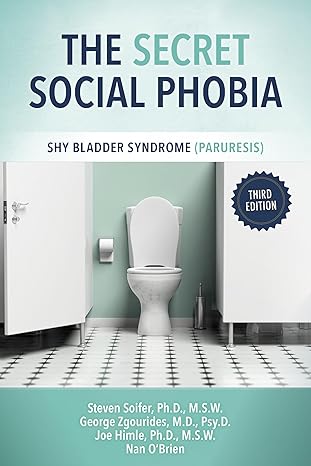


QUICK LINKS
INTERNATIONAL PARURESIS ASSOCIATION
P.O. Box 21237
Catonsville, MD 21228
You Are Not Alone.
There Is Help For You!
Shy Bladder, Bashful Bladder, Pee Shy
IPA OFFICE HOURS
Monday - Friday
10:00am - 6:00pm (ET)
844-I-CANT-PEE (422-6873)
US/Canada
443-315-5250 Office
Email: getinfo@paruresis.org
This website is NOT a substitute for medical or legal advice and does not constitute the practice of law, medicine, psychiatry, clinical psychology, clinical social work, or any other mental health profession. If you are having trouble urinating, you should always contact a physician since difficulty with voiding can be a symptom of a serious medical condition. We are a group of professional people and people who have suffered with paruresis. We have assembled a board and a board of advisors to help people cope with urinary dysfunction that has a psychological or social origin. On this website, we are NOT practicing medicine, psychiatry, clinical psychology, clinical social work or any other mental health profession. You should have your doctor evaluate your condition before diagnosing yourself, and seek the appropriate necessary mental health counseling if warranted. IPA, Inc. disclaims any and all legal liability whatsoever. Use of the term “member” or “membership” refers to donors above $100 each July 1 to June 30 period and does not convey any legal or ownership rights in IPA.