
Pelvic Floor Awareness for Easier Urination
1. Understanding Your Pelvic Floor
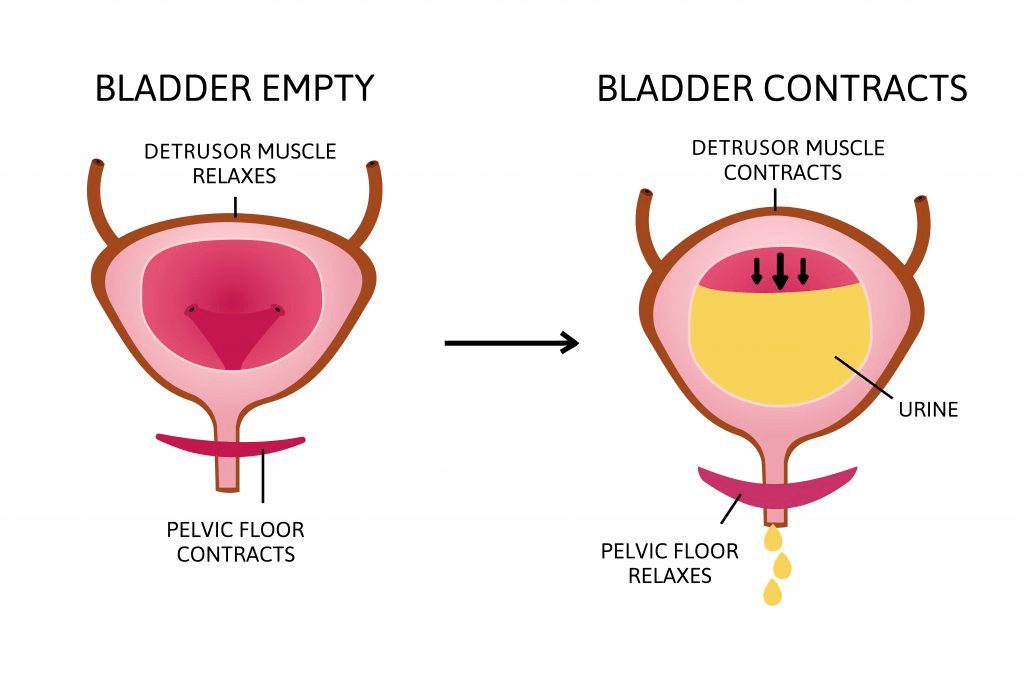
You have two main sets of pelvic floor muscles that work together like a supportive sling. The back part (near the anus) helps control bowel movements, while the front part (around the urethra) helps control urination. When working with urination, the goal is to gently release the front sling — a soft, forward melting sensation rather than a push.
2. Feeling the Difference: Urination vs. Defecation
Function |
Location |
Action |
Helpful Cue |
|
Urination |
Just behind the pubic bone, at the base of the penis or clitoris. |
A soft release, widening, or gentle forward opening of the front sling. |
“Let the urine flow naturally. Imagine widening the opening of a straw and letting it move forward on its own.” |
|
Defecation |
Near the tailbone and anus. |
A downward or backward bulging or bearing-down motion. |
“Release down and back, toward your tailbone. Imagine letting go in that direction.” |
3. Encouraging Allowing, Not Forcing
When you urinate, think of allowing rather than doing. You’re not pushing the stream out — you’re simply getting out of its way. Try using imagery and breath-based release to help your body soften:
-
- Imagine melting butter — warmth spreading forward and softening the base of the pelvis.
- Let the front of your pelvis feel open, like the base of a funnel.
- As you inhale, let your breath drop into your belly; as you exhale, keep the area soft and open.
4. The Role of Breathing
Your diaphragm and pelvic floor move together. When you inhale, both descend gently. When you exhale, they rise. During urination, let the inhale soften the pelvic floor and the exhale maintain that openness. This promotes flow without effort.
5. Common Mistake to Avoid
Avoid bearing down or pushing to try to start your stream. That’s actually the defecation pattern — the muscles tighten at the front and make it harder to urinate. Instead of bearing down, imagine melting or widening forward.
Courtesy Dan Rocker, LCSW, MA; co-director Shy Bladder Center, and IPA President (April 2026)




QUICK LINKS
INTERNATIONAL PARURESIS ASSOCIATION
P.O. Box 21237
Catonsville, MD 21228
You Are Not Alone.
There Is Help For You!
Shy Bladder, Bashful Bladder, Pee Shy
IPA OFFICE HOURS
Monday - Friday
10:00am - 6:00pm (ET)
844-I-CANT-PEE (422-6873)
US/Canada
443-315-5250 Office
Email: getinfo@paruresis.org
This website is NOT a substitute for medical or legal advice and does not constitute the practice of law, medicine, psychiatry, clinical psychology, clinical social work, or any other mental health profession. If you are having trouble urinating, you should always contact a physician since difficulty with voiding can be a symptom of a serious medical condition. We are a group of professional people and people who have suffered with paruresis. We have assembled a board and a board of advisors to help people cope with urinary dysfunction that has a psychological or social origin. On this website, we are NOT practicing medicine, psychiatry, clinical psychology, clinical social work or any other mental health profession. You should have your doctor evaluate your condition before diagnosing yourself, and seek the appropriate necessary mental health counseling if warranted. IPA, Inc. disclaims any and all legal liability whatsoever. Use of the term “member” or “membership” refers to donors above $100 each July 1 to June 30 period and does not convey any legal or ownership rights in IPA.